Florence: Hello, and welcome to the Peralane wholesale podcast. I'm Florence. Today: three letters every new buyer meets in the first week. M, O, Q.
Oliver: Minimum order quantity! I know this one. I saw a supplier last night: MOQ five. Five pieces. Done, easy.
Kaan: Five pieces... of what?
Oliver: Uh. Of... clothes?
Kaan: That is the whole episode, Oliver. The number means nothing until you know what it counts.
Florence: So what can it count, Kaan?
Kaan: Many things. Per order, as money. Per style. Per colour. Per size. Or per pack. And often two rules at once.
Oliver: Per colour? Wait, really?
Kaan: Mm-hm. Six pieces per style sounds small. Then you read the small print: six per style, per colour. You want three colours... it is eighteen.
Oliver: So my five could be fifteen. Or twenty.
Florence: Which is why the first question to any supplier is simply: minimum of what? Now, in Turkish wholesale there's this word, series. What is a series pack?
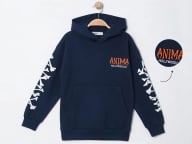
Kaan: One style, one colour, a set run of sizes in one pack. For example our boys' navy hoodie: a pack of four, one each for age nine, ten, eleven and twelve.
Oliver: And the price?
Kaan: Seven dollars ten a piece. So twenty-eight dollars forty for the whole series.
Oliver: Oh, that's nice. One pack and I have every size on the shelf.
Kaan: Yes. But on a fixed series you can't say, um, only two of age ten, please. You take the run as it comes.
Florence: So how do you compare suppliers when they all write it differently?
Kaan: Same budget, then count. Give every supplier five hundred dollars, same price, nine dollars a piece.
Oliver: Okay, okay, I'm ready.
Kaan: Supplier A: twelve per style, per colour. Five hundred buys you four styles. Supplier B: five per model. Eleven styles.
Oliver: And the one with the big scary five hundred dollar minimum-
Kaan: -packs of four, mix anything. Fourteen styles. The biggest number gives the most choice.
Oliver: Okay, that's... annoyingly logical.
Florence: And for a first order, choice is everything. You don't know yet what your customers will buy.
Kaan: One more thing. Add shipping before you compare. With us, air cargo is twenty percent of the goods. So five hundred is really about six hundred, before duties.
Florence: Let's talk red flags. When is a low MOQ too good to be true?
Kaan: When it says MOQ one, at factory prices. A new production run has fixed costs. Cutting, dyeing, setting up the line. Somebody pays for that.
Oliver: So who is selling one piece at factory price?
Kaan: Often a reseller with a photo list. Or last season's leftovers. So ask: who holds the stock, and where does it ship from?
Florence: And a number with no unit?
Kaan: Is not a term. Get it on a proforma invoice. Prices, quantities, dispatch time. Before you pay.
Oliver: And private label at five pieces?
Kaan: Your own label is a production run. Five pieces... no.
Florence: So, the takeaway. How do you use a low minimum well?
Kaan: Test, then reorder. Eight to twelve styles, one pack each. Watch two, three weeks. What sells, you buy again.
Oliver: And never, ever say MOQ five without asking: five of what.
Florence: The full guide, with the comparison table and six questions to send a supplier, is on peralane dot com slash blog. Thanks for listening, see you next time.
Wholesale clothing MOQ (minimum order quantity) is the smallest order a supplier will accept, and the number on its own tells you very little. What matters is what it counts: pieces per style, per colour, per size pack, or money per order. A "low MOQ" of 5 pieces per model can tie up more cash, and give you fewer styles, than a $500 order minimum that lets you mix everything. Before you order, turn every minimum into three numbers: how many pieces, how much cash, and how many different styles you get for it.
Key takeaways
- Always ask "minimum of what?": per order, per style, per colour, per size or per pack are very different commitments.
- In Turkish wholesale, one series pack holds one style and colour in a set run of sizes, so the real minimum per style is one pack.
- Compare suppliers on cash and variety, not on the MOQ number: what does $500 buy, and in how many styles?
- Add shipping before you compare. A $500 order is roughly a $600 decision once 20% air cargo is on top, before duties.
- A tiny MOQ at factory prices is a question to ask, not a bargain to grab: find out who holds the stock.
An MOQ is a rule about the unit, so first find out which unit. Suppliers write their minimums in at least six ways, and many combine two of them. The buyer's guide on Grow Your Boutique lists them as a total unit count, units per style, units per colour, units per size, a case pack you cannot split, a dollar minimum or an opening-order minimum.
| How the minimum is written | What it means | What it costs you |
|---|---|---|
| Per order (minimum order value) | The whole invoice must reach an amount, for example $500 | Any mix of styles, as long as the total is reached |
| Per style or model | A set number of pieces of one design | Fewer styles for the same budget |
| Per colour | The per-style count applies to every colourway | Doubles or triples the order if you want two or three colours |
| Per size | A count for each size you take | Large orders fast on wide size ranges |
| Per pack or series | One sealed pack with a fixed size run | You take the size spread as it comes |
| Opening vs reorder | A higher first order, a lower one after | Plan the second order before you sign up |
The most common surprise is the colour rule. "6 pieces per style" sounds small until you learn it means 6 per colour, and the three colours you wanted turn it into 18.
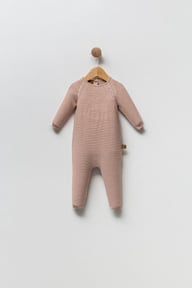
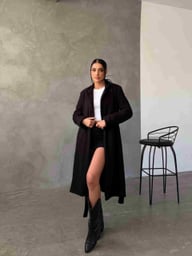
Most Turkish wholesalers sell by the series: one pack holds one style in one colour across a set run of sizes or ages. The per-style minimum is therefore one pack, and the pack decides the size spread. Here are three real examples from our range, with prices per piece:
For a small boutique the series is helpful: one pack gives you the whole size run, so you can offer the style to every customer without guessing sizes. The catch is that you cannot take just the sizes you sell best on fixed-series styles. On our site the product page shows the pieces and sizes in one series, and some styles let you pick sizes instead; the FAQ explains which is which.
The fairest way to compare two suppliers is to give both the same budget and count what you get. Take three sets of terms, all at a hypothetical $9 a piece:
| Supplier terms | Smallest order per style | What about $500 buys | Different styles |
|---|---|---|---|
| A: 12 pieces per style, per colour | $108 | 4 style-colours, 48 pieces ($432) | 4 |
| B: 5 pieces per model | $45 | 11 models, 55 pieces ($495) | 11 |
| C: $500 per order, packs of 4 | $36 | 14 packs, 56 pieces ($504) | 14 |
Supplier A has the "highest" MOQ and gives you the least choice. Supplier C has the largest single number ($500) and gives you the most styles, because the minimum covers the whole order rather than each design. Variety matters most in a first order: you do not yet know what your customers will buy, so you want many small bets rather than a few big ones.
Then add the costs that sit on top. With us, shipping is a percentage of the goods total: 20% for air cargo with FedEx, UPS or DHL, 15% for economy post, as set out on the shipping and returns page. A $500 order by air is therefore about $600 before import duties and VAT, which are the buyer's to pay. Work out the cost per piece after shipping before you compare it with another supplier's price.
A low MOQ clothing supplier can be the right partner, but a very low minimum at factory prices needs an explanation. Producing a new style has fixed costs: cutting, dyeing and setting up a line. That is why, in the JOOR guide to minimum order quantities, anything under 500 units is already called a low MOQ for production. Ask more questions when you see these signs:
Our supplier vetting checklist covers the rest of the checks before your first payment.
Six questions clear up almost every minimum order quantity a boutique meets. Send them in your first message and keep the answers with your order:
For reference, our own answers: the minimum is $500 per order, any mix of styles and brands counts toward it, and the same rule applies to every reorder. Standard dispatch takes 6 to 15 business days because goods are sourced per order from our manufacturer network.
A low minimum is worth most when you use it to test. Spread the first order across many styles, one pack each, then reorder what sells. A first $500 order could be eight to twelve packs across the kids and baby range and the women's range, rather than four packs of your favourite style.
Watch the first two to four weeks of sales, note which styles and sizes go first, and put the second order on those. Our guide on how much inventory to start a boutique shows how to plan that first drop and read sell-through before you reorder.
MOQ stands for minimum order quantity: the smallest order a supplier accepts. In clothing it can be counted per order (a money amount), per style, per colour, per size or per pack. Always ask which one applies, because "6 per style" and "6 per style, per colour" are very different orders once you want more than one colour.
For a first order, terms that let you buy one pack or a few pieces per style, with an order minimum you can reach by mixing styles, are the most flexible. At around $9 a piece, a $500 order minimum with packs of 4 to 5 pieces lets you carry eleven to fourteen styles. Compare suppliers by how many styles your budget buys, not by the MOQ number alone.
For small buyers it usually is. A minimum order value, such as $500 per order, lets you spread the money across many styles and test what sells. A per-style minimum fixes how much of each design you must take, so the same budget buys fewer styles. Some suppliers set both rules, and then you must meet both at once.
A series pack holds one style in one colour across a set run of sizes or ages, for example one piece each of ages 9, 10, 11 and 12. It is the usual unit in Turkish wholesale, so the minimum per style is one pack. On fixed-series styles you cannot split the pack; some styles let you pick sizes, and the product page says which.
Sometimes. Suppliers bend more on how you reach a minimum than on whether it exists: mixing styles, taking a pack instead of a dozen, or a lower minimum on reorders. Ask after your first order, when you have a track record. For custom production or your own label, minimums stay high because every run has setup costs.