Host: Hello and welcome to the Peralane wholesale podcast. Today: how to vet a wholesale clothing supplier before you send them a single dollar. Our sourcing expert in Istanbul is here, and so is my co-host, who asks what every new buyer wants to know.
Cohost: Starting with the scary one. Someone messages me on Instagram with a wholesale catalogue and a WhatsApp number. Prices look amazing. Is that a scam?
Expert: Not automatically. Lots of real wholesalers, Turkish ones included, do customer service on WhatsApp. The question is whether WhatsApp is the only thing there. A real supplier also has a registered company, a website with written terms, and a way to pay that you can dispute.
Host: So where do you start?
Expert: With the company name. Ask for the registered name and number, then look it up yourself. Companies House in the UK is free. In the EU you can check a VAT number on VIES. For a Turkish company there's the trade registry gazette. Then make sure the same name is on the website, the invoice and the bank account.
Cohost: And if they say, pay my cousin's account?
Expert: Then you stop. A personal account, or a different name from the company, is the clearest warning sign there is.
Host: Let's talk payment, because that's where people actually lose money.
Expert: Right. UK Finance says purchase scams were seven in ten of the scams where people send the money themselves by bank transfer. So for a first order with a new supplier, pay with PayPal goods and services or a card. With PayPal you can open a dispute up to 180 days after you pay.
Cohost: What about friends and family on PayPal? It's cheaper.
Expert: It's cheaper because there's no protection. Never for business. Bank transfer is fine later, once you trust the supplier. Just watch for emails saying our bank details have changed. Call them on a number you already have before you pay a new account.
Host: What should be written down before you pay?
Expert: Six things. The minimum: per order, or per style? What's in one pack, exactly which sizes. Dispatch time and carrier. Who pays import duty. How many days you have to report a faulty item. And until when you can cancel. A good product page shows the pack contents. Sizes twenty-seven to thirty-two, one of each. Then you know what six pieces you're getting.
Cohost: The duty one catches people out, doesn't it? I'd have assumed the price includes everything.
Expert: Most people do. Usually the buyer pays duty and import VAT on arrival, so put it into your landed cost before you set retail prices. A supplier that writes this down clearly is being honest with you. One that says don't worry about customs is not.
Host: And the defect window matters because?
Expert: Because it's short. Seven days is common. If you open the boxes two weeks later, you've lost your claim.
Cohost: Should I ask for samples first?
Expert: Ready-stock wholesalers often don't sell single samples, so make your first order the sample. Buy the minimum across a few styles. When it arrives, count the packs, measure a few pieces against the size chart, check the labels and the seams.
Host: And for kidswear, the safety side.
Expert: Yes. In the UK and EU, clothes for young children shouldn't have drawstrings or cords around the head and neck. And if someone says OEKO-TEX, put the certificate number into the OEKO-TEX label check. It takes a minute.
Cohost: Give me the walk-away list. Quick version.
Expert: No company name. Payment to a personal account, crypto or gift cards. Prices far below everyone else with no fabric details. Pressure to pay today. Terms only in chat. And paying a fee just to see a supplier list.
Host: Clear and practical. The full checklist, with links to every register we mentioned, is in the article on the Peralane blog. Thanks for listening.
To vet a wholesale clothing supplier, check four things before you send money: that the company is registered under the name on your invoice, that its terms (minimum, pack contents, dispatch, defects) are written down, that you can pay in a way you can dispute, and that a small first order matches what was promised. A supplier that passes all four is safe to grow with. One that fails any of them, however good the prices look, is not.
Key takeaways
- Look the company up in its official business register and make sure the bank account name matches the invoice.
- Get minimum order, pack contents, dispatch time, shipping, duties and the defect policy in writing before you pay.
- Pay a new supplier with PayPal (goods and services) or a card, not a bank transfer to an account you cannot check.
- Make the first order small and inspect every piece against the size chart and the product page.
- Walk away from pressure, payment to a personal account, or a seller who will not say who they are.
A bad first supplier can take your whole stock budget, and small shops rarely get that money back. Most losses do not come from poor quality; they come from paying someone who never ships.
In the UK, UK Finance's 2025 Annual Fraud Report found that purchase scams still made up seven in ten authorised push payment scams in 2024. That is the type where you send the money yourself by bank transfer, which is exactly how many "wholesale catalogue" sellers on WhatsApp and Instagram ask to be paid.
The good news: real wholesalers are easy to check, and the checks below take about an hour.
Ask for the registered company name and registration number, then look it up yourself in the official register. Do not rely on a screenshot of a certificate.
| Supplier based in | Where to check | What you see |
|---|---|---|
| United Kingdom | Companies House (free) | Status, registered address, directors, filing history |
| European Union | EU VIES | Whether an EU VAT number is valid and whose it is |
| Türkiye | Türkiye Ticaret Sicili Gazetesi | Registration notices by registry office and company name |
| Hong Kong | Companies Registry (ICRIS) | Company status and registered office |
Then check that four things carry the same name: the website's legal page, the invoice, the email domain and the bank account. A mismatch is the single clearest warning sign. A supplier that asks you to pay "my cousin's account" or a personal name is not a wholesaler you can claim against.
Two quick checks you can run yourself:
A real supplier publishes its terms; a risky one keeps them in chat. Ask these questions and save the answers.
A good product page answers the pack question for you. For example, these antique green flared denim trousers list the pack contents as sizes 27 to 32, one of each, so you know exactly what six pieces you get.
For comparison, here is what Peralane publishes on its shipping and returns page: a $500 minimum across the whole order (any mix of styles), dispatch in 6 to 15 business days, express air delivery in 2 to 6 business days after dispatch, duties paid by the buyer, and defect or wrong-item claims within 7 days of delivery for a full refund or replacement. Whoever you buy from, you should be able to point to the same facts in writing.
Your payment method is your insurance. For a first order with a new supplier, use a method that lets you open a dispute if the goods never arrive or are not as described.
| Payment method | Can you dispute it? | Use for |
|---|---|---|
| PayPal (goods and services) | Yes: PayPal Purchase Protection disputes can be opened within 180 days of payment | First orders, new suppliers |
| Credit or debit card | Usually, through your card issuer's chargeback process | First orders |
| PayPal "friends and family" | No: personal payments are not covered | Never for business purchases |
| Bank transfer | Hard: once sent, recovery depends on the receiving bank | Regular orders with a supplier you know |
| Crypto, gift cards, money apps | Practically no | Never |
Bank transfer is normal in wholesale once you trust a supplier, and it often has lower fees. The risk is invoice fraud: an email that says "our bank details have changed". Only pay into the account printed on the supplier's own invoice or legal page, and confirm any change by phone using a number you already have.
Treat the first order as a paid sample. Buy the minimum, spread it over a few styles, and inspect everything the day it arrives.
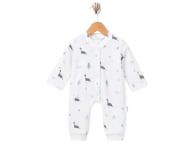
Photograph any problem straight away and report it inside the defect window. Small, easy-to-check items make a good test: a pack of dinosaur print baby rompers at $2.28 a piece in sizes 0 to 9 months shows you fabric, print and sizing for very little money.
Some signs are enough on their own. If you see any of these, stop before you pay.
A WhatsApp number on its own is not a red flag. Many real wholesalers, including Turkish ones, run customer service on WhatsApp. The difference is that a real one also has a registered company, a website with terms, and a payment method you can dispute. Our article on wholesale clothing supplier scams has more examples of how fake sellers operate.
Look up the company in its official business register, check that the name matches the invoice and bank account, read its written terms for dispatch, duties and defects, and pay your first order with PayPal goods and services or a card. If all of that checks out and a small first order arrives as described, the supplier is legitimate.
It can be, if WhatsApp is only the chat channel. Many real wholesalers answer questions there. It is not safe when WhatsApp is the whole business: no company name, no website terms and payment only by bank transfer to a personal account. Check the company first and pay with a method you can dispute.
Yes, or treat your first order as the sample. Ready-to-ship wholesalers often do not sell single samples, so buy the minimum spread across a few styles. Inspect sizes, labels and seams the day it arrives, and report any problem inside the supplier's defect window with photos.
PayPal goods and services or a credit card, because both let you open a dispute if the goods never arrive or are not as described. PayPal allows disputes within 180 days of payment. Avoid "friends and family" payments, money apps, crypto and gift cards, which give you no protection.
Start with suppliers that publish prices, pack contents and policies before you register, such as established wholesale websites and trade marketplaces. If you are new to sourcing, our guide on how to start selling kids clothes from home shows what a first order can look like.
If you want to run these checks on us, everything is published: company details on our imprint page and terms on the shipping page. When you are ready, start with a small mixed first order from the kids and women's wholesale range.